Integrated design and installation of workshop ventilation
ABL Engineering Group carries out a full range of works on ventilation of workshops throughout Kazakhstan – from engineering calculations and development of design documentation to installation, commissioning and subsequent repair of systems. We take into account the specifics of each production: the area of the facility, the nature of polluted air emissions, the intensity of heat loads and the requirements for the microclimate of the working area.
Experience since 2009 and 40+ completed projects– from metallurgical plants to large warehouse complexes. ABL Engineering Group’s team of experienced engineers and specialists designs and organizes the installation of ventilation systems that operate in accordance with safety standards and customer operational requirements.
Ventilation systems and equipment for workshops
The selection of equipment is based on the production class, room volume and air exchange rate. The following types of ventilation systems and devices are used in industrial workshops:
- Air handling units— provide organized air exchange, maintain pressure balance and remove exhaust air from the work area.
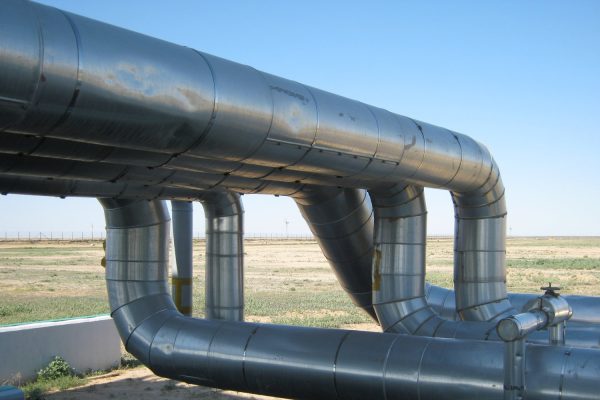
- Duct fans and duct networks— form a branched system for distributing air flows throughout the entire volume of the workshop.
- Local suction and exhaust hoods— are used directly at sources of emissions: welding stations, paint booths, chemical areas.
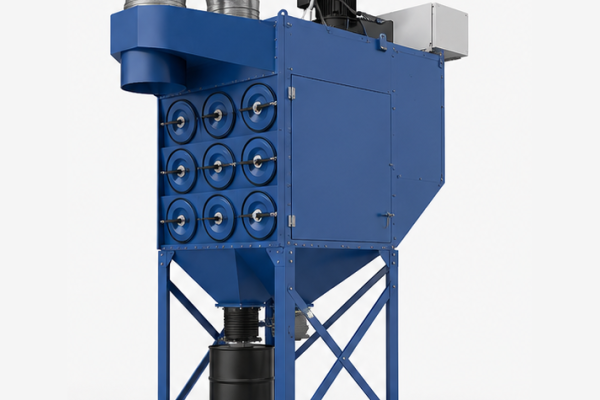
- Filters and air purification systems— provide filtration of dust, particles, steam and chemical impurities, reduce the concentration of harmful substances to standard values.
- Heat recovery— recuperators return the thermal energy of exhaust air, reducing operating costs for heating in winter.
- Electric air heaters and heating units— maintain a standardized temperature of the supply air at the entrance to the workshop.
- Valves, grilles and control elements— allow you to regulate and control the distribution of air flows across production zones.
- Smoke removal systems– an emergency component of the ventilation complex, mandatory according to fire safety standards.
- Automatic control units— allow you to maintain specified microclimate parameters in automatic mode, monitor and remotely control all network elements.
The equipment is produced at ABL Engineering Group’s own plant in Temirtau: 2 production workshops with an area of over 1,000 m², a CNC machine park. This allows you to calculate and manufacture non-standard air duct assemblies, adapters and housing elements for a specific facility without the involvement of third-party suppliers.
How the full cycle of work is organized
The comprehensive implementation of a workshop ventilation project includes successive stages, each of which is controlled by Technical Department engineers:
- Site survey and initial data collection— area, height, heat emissions, nature of production processes, existing emissions and removal of polluted air are recorded.
- Calculation of air exchange and selection of equipment— engineers calculate the exchange rate, the speed of air flows, the load on filtration and air purification, and select installations and devices for specific conditions.
- Manufacturing and supply of equipment— air ducts, fans, filters, valves and other elements are supplied from our own production or from trusted partners.
- Installation of ventilation systems— our own installation teams carry out work on sites of any complexity, observing the technology and deadlines agreed with the customer.
- Commissioning and parameter control— after installation, all operating modes are checked: maintaining the specified temperature, humidity, air flow speed and the level of removal of harmful emissions.
- Maintenance and repair— under the agreement, ABL Engineering Group carries out scheduled maintenance, replacement of consumables and prompt repairs of ventilation systems during operation.
This approach makes it possible to organize the operation of the workshop ventilation as a single engineering system, taking into account all production factors, regulatory requirements and tasks for removing harmful substances, removing heat emissions and maintaining a comfortable microclimate at personnel workplaces.
| Stage | What is being done | Responsible |
|---|---|---|
| Calculation and design | Development of technical specifications, calculation of air exchange, selection of equipment | Technical Department engineers |
| Manufacturing | Production of air ducts, non-standard network elements | Plant in Temirtau |
| Installation | Installation of equipment, laying air ducts, connecting automation | own installation teams |
| Commissioning | Monitoring parameters, adjusting valves and grilles, checking filtration | Technical Department engineers + team |
| Service | Scheduled repairs, filter replacement, system maintenance | Service department |
Solving problems and ensuring the safety of workshop ventilation
Insufficient ventilation efficiency is one of the most common reasons for non-compliance with occupational safety standards in industrial enterprises. When the concentration of harmful and toxic substances in the air exceeds permissible limits, the health of personnel is under direct threat. Dust, chemical and steam impurities, particles, hazardous and explosive compounds emitted – all this requires immediate and complete removal of contaminated air from the work area.
ABL Engineering Group designs and installs workshop ventilation systems taking into account real production conditions: the speed and pressure distribution of air flows are calculated individually, based on the type of pollution, room volume and technological processes. This allows us to ensure a stable microclimate, comfortable working conditions and safe air parameters at each site.
Over the years of work and 40+ specialized facilities, we have not allowed a single case of non-compliance with sanitary and fire safety standards due to the fault of design or installation solutions. This is the result of systematic compliance with regulations and standards at every stage – from calculation to commissioning.
Increased operating costs are often the result of a poorly designed system: excess power, equipment noise, and ineffective contaminant removal all add to the operational burden. Our engineers eliminate these risks at the design stage, selecting equipment with optimal characteristics and providing emergency ventilation as a mandatory safety element.
- Removal of harmful substances and contaminants: local suction and general exhaust systems ensure effective removal of dust, steam and chemical impurities, toxic and hazardous compounds directly in the area of their formation.
- Safety of personnel and workers: the concentration of contaminated particles is maintained below the maximum permissible values according to sanitary standards – the health of personnel is protected at the level of the design solution.
- Compliance with regulations: All systems are designed in accordance with sanitary and fire safety requirements and current standards, including regulations for explosive atmospheres.
- Comfort and microclimate: maintaining comfortable parameters of temperature, humidity and air exchange rate reduces worker fatigue and increases labor productivity.
- Emergency ventilation: is provided as a mandatory element of safe production systems – ensures emergency removal of hazardous and explosive substances in emergency situations.
- Noise and vibration: selection of equipment taking into account permissible noise levels eliminates additional discomfort and complies with labor safety standards.
Trust in the contractor in matters of industrial safety is confirmed not by words, but by documents. ABL Engineering Group has certificates for equipment of its own production, provides a guarantee for the work performed and supplied systems, as well as a complete set of technical documentation for each facility. Compliance with all regulations is not an option, but a basic condition of our work.
| Risk | Consequence without solution | Our approach |
|---|---|---|
| Insufficient ventilation efficiency | Exceeding the concentration of harmful substances, fines, production stoppage | Calculation of air exchange based on real pollutant emissions |
| Non-compliance with standards | Regulations of supervisory authorities, personnel risks | Design strictly according to sanitary and fire standards |
| Increased operating costs | Excessive energy consumption, frequent repairs | Optimal selection of equipment, heat recovery |
| Hazardous and explosive environments | Accidents, threat to workers’ health | Emergency ventilation, explosion-proof design |
Risks of non-compliance with sanitary and technical standards are eliminated comprehensively: through competent design, high-quality installation by our own teams and subsequent maintenance of systems. The safety of personnel and workers is a measurable result that we provide at each of the 40+ specialized facilities.
Prices, terms and consultations on ventilation of workshops
The material has been updated by ABL Engineering Group specialists. Last updated: 2025
The cost of workshop ventilation services is calculatedindividually for each specific object. The final price depends on the area and volume of the production facility, the amount of harmful emissions, the type of ventilation system and the composition of the design documentation. There is no universal price list: two workshops of the same area at different enterprises may require fundamentally different engineering solutions.
We carry out installation in Central, Northern and Eastern Kazakhstan and supply equipment to any region of the country. We do not carry out work on residential facilities, do not serve individuals and do not accept applications for ventilation of apartments and cottages. This approach allows us to maintain a high professional level and concentrate resources where they are really needed. Our specialization is exclusively the B2B segment.
What affects cost and timing?
- Workshop area and volume— determine the system performance and the amount of equipment.
- Specifics of industrial production— the presence of dust, chemical vapors, heat emissions, and explosive zones increases the requirements for the composition of the system.
- Scope of project documentation— developing a complete package of documents takes more time than working on a ready-made customer project.
- Number of installation sections— complex workshops with several technological zones require the parallel deployment of several teams. ABL Engineering Group has its own installation teams, which makes it possible to carry out several large projects at the same time.
- Equipment option— the use of equipment of ABL Engineering Group’s own production (Temirtau, 2 production workshops with an area of more than 1000 m², CNC machine park) reduces delivery time and reduces the final cost of the project.
Estimated deadlines for completing the work
| Stage | Typical terms |
|---|---|
| Engineer visit, site inspection | 1–3 business days |
| Development of project documentation | from 5 working days (depending on complexity) |
| Manufacturing and supply of equipment | agreed upon individually for the project |
| Ventilation system installation | determined by the volume and number of installation teams |
| Commissioning and commissioning of the facility | included in the scope of work |
The exact terms are fixed in the contract after studying the technical specifications and documents of the facility.
FAQ: frequently asked questions about workshop ventilation
How is the cost of ventilation for a production workshop calculated?
The cost of services is determined individually: the area and height of the room, the type of production processes, the presence of harmful emissions (dust, vapor, heat), the need to develop design documentation and the selected configuration option are taken into account. The use of equipment produced by ABL Engineering Group (Temirtau) allows us to reduce the final cost compared to purchasing from third-party suppliers.
What is the minimum size of the site that ABL Engineering Group works with?
The company works with industrial and commercial facilities of any scale in B2B format. Applications from individuals, as well as for residential properties (apartments, cottages, houses) are not considered.
How long does it take to install a ventilation system in a workshop?
The installation time depends on the scope of work, the number of technological zones and the composition of the teams. ABL Engineering Group has 25 installation teams, which allows, if necessary, parallel installation in several areas of one facility. The exact terms are fixed in the contract.
Do specialists travel to sites outside of Temirtau?
Yes. An engineer’s visit to inspect the site takes 1–3 business days from the date of approval.
Is it possible to get advice before signing the contract?
Yes. The initial consultation is free. The Technical Department engineer clarifies the initial data on the facility and prepares a commercial proposal taking into account the specifics of production. Our clients – shopping centers, restaurants, office complexes and other commercial organizations – receive realistic estimates already at the stage of initial contact. To contact us, use the feedback form on the website or phone.Implemented projectsavailable on the corresponding page of the site.
Quality guarantees and company experience in workshop ventilation
ABL Engineering Group has been operating in the industrial engineering market since 2009. During this time it was implemented40+ objects— production workshops, warehouses, shopping centers and office complexes of any scale. The company’s accumulated experience allows us to take on technically complex tasks: multi-level air exchange systems, facilities with aggressive environments, explosive zones and industries with high heat releases.
Own production of equipment is a key competitive advantage of ABL Engineering Group. The plant is located in Temirtau: two workshops with a total area of more than 1000 m², a CNC machine park. The full production cycle eliminates dependence on third-party suppliers and ensures quality control at every stage – from metal cutting to the final assembly of ventilation units. This directly affects the reliability of the installed systems and delivery times.
The availability of equipment certificates and compliance with standards is confirmed upon delivery of each facility.
Among the company’s clients areArcelorMittal, large metallurgical plants, logistics complexes and shopping centers in Kazakhstan. Working with such customers places strict requirements on deadlines, document flow and technical level of execution. ABL Engineering Group has been systematically meeting these requirements for a decade and a half.
- own installation teams— own staff, without subcontractors at key stages;
- A team of experienced specialists and Technical Department engineers develops working documentation for each facility individually;
- Guarantees for work and equipment performed are fixed in the contract – the conditions are discussed at the stage of the commercial offer.
Technical documentation transferred to the customer after completion of installation includes executive diagrams, equipment passports, test reports and protocols for measuring air exchange parameters. This allows the operating organization to confirm the system’s compliance with standards during scheduled inspections by supervisory authorities.
ABL Engineering Group works exclusively with industrial and commercial facilities – manufacturing plants, warehouses, shopping and office centers of any size.
Microclimate control and climatic parameters of workshop ventilation
An industrial workshop is an environment with constantly changing conditions: equipment generates heat, technological processes saturate the air with vapors and dust, and the number of personnel creates an additional load on air exchange. Without a well-designed system, it is impossible to regulate temperature, humidity and air mass composition within acceptable limits. ABL Engineering Group engineers design workshop ventilation so that microclimate control is continuous and climatic parameters are stable under any production mode.
Key calculation indicator –air exchange rate. It determines how many times per hour the volume of the room is completely replaced by fresh, clean air. For welding areas, the multiplicity reaches 10–20, for machining areas – 4–8, for warehouse areas – 2–4. Insufficient flow rates mean the accumulation of exhaust air, an increase in the concentration of harmful substances and a violation of sanitary standards.
ABL Engineering Group technical position:“Climate parameters are not an abstraction. Every degree of temperature deviation and every percentage of humidity above the norm means a decrease in personnel productivity and the risk of product damage.
The systems that ABL Engineering Group designs solve several interrelated problems simultaneously:
- Fresh air supply— organized supply of clean outdoor air with pre-filtration and, if necessary, heating or cooling.
- Exhaust air removal— exhaust from zones of maximum pollution, taking into account the location of sources of heat and harmful emissions.
- Temperature control— integration with heating and cooling systems allows you to maintain the working area within the standard range all year round.
- Humidity control– especially critical in industries with hygroscopic materials or precise measuring operations.
- Thermal balance and energy saving— heat recovery from the exhaust stream reduces heating costs in winter and reduces cooling load in summer.
Air flow control in the workshop is based on the principleorganized air exchange: fresh air is supplied to the work area, and exhaust air is removed through exhaust devices located in areas of maximum pollution. This approach eliminates stagnant zones and provides comfortable working conditions without drafts and sudden temperature changes.
| Parameter | Standard (GOST, SanPiN) | What does the system regulate? |
|---|---|---|
| Working area temperature | 16–25 °C (depending on the category of work) | Supply with heating/cooling, thermal curtains |
| Relative humidity | 40–60% | Humidifiers, dehumidifiers as part of air handling units |
| Air exchange rate | From 2 to 20+ (by type of production) | Fan performance, air duct cross-section |
| Air speed in the working area | No more than 0.5 m/s (light work) | Location and type of air distributors |
When designing, the team of experienced specialists and engineers of ABL Engineering Group takes into account the thermal loads from the equipment, the number of workers, the specifics of the technological process and the requirements for the atmosphere of the working area. Availability of certificates and compliance with the standards SN RK 4.02-105-2014, GOST 12.1.005 and industry sanitary rules are a prerequisite for each project.
The integration of heat recovery allows up to 75–80% of the thermal energy from the exhaust stream to be returned back to the air supply system. At facilities of any scale, this provides significant energy savings during the heating season – especially important in the climatic conditions of Kazakhstan with long winters. Cooling in the summer is provided by chillers or cooling sections as part of air-handling units, which allows maintaining personnel comfort without overheating the equipment.
If the microclimate at your enterprise is disturbed, the staff complains of stuffiness or overheating, and the current system cannot cope with the load – contact the engineers of ABL Engineering Group. We will conduct an inspection of the facility, perform air exchange calculations and offer a solution that meets the standards and actual production conditions.
Frequently asked questions about workshop ventilation
Below are answers to the most common questions regarding the selection, design, installation and maintenance of ventilation systems for industrial workshops. The material was prepared by Technical Department engineers of ABL Engineering Group based on 15 years of practice and 40+ specialized objects.
What types of ventilation systems are suitable for industrial workshops?
The choice of system type is determined by the technological process, the area of the facility and the nature of the emissions. In the industrial practice of ABL Engineering Group the following are used:
- Air handling units— provide organized air exchange, maintain a normal air exchange rate and remove harmful substances from the work area.
- Local exhaust suction— installed directly at the source of dust, steam and chemical impurities, and toxic substances.
- Duct and cassette systems with fine filters – used where control of contaminant concentrations and a high degree of air filtration are required.
- Heat recovery systems— reduce operating costs for heating and cooling, provide energy savings.
- Emergency ventilation— mandatory in explosive and fire hazardous industries in accordance with fire safety requirements.
The specific option is selected individually, taking into account the specifics of production, room volume and regulatory requirements.
How is the required ventilation capacity calculated?
Performance calculation is a basic engineering design stage. ABL Engineering Group specialists take into account:
- Air exchange rate established by sanitary norms and labor safety standards.
- Thermal emissions from equipment and technological processes – for the correct calculation of cooling and heat removal.
- Concentration and nature of harmful emissions: dust, chemicals, vapors, hazardous gases.
- The area and height of the workshop, the configuration of air ducts and the location of personnel workplaces.
- Speed and pressure of air flows, permissible noise level in the work area.
The result is design documentation justifying the choice of equipment: fans, units, valves, grilles and filters.
What regulations and standards are observed when designing ventilation?
The design of ventilation for industrial workshops is carried out in strict accordance with current standards and requirements:
- SN RK 4.
- GOST 12.1.005 – sanitary standards for the content of harmful substances in the air of the working area.
- Fire safety requirements regarding emergency ventilation and smoke removal.
- Industry standards and technical regulations applicable to a specific type of production.
The presence of certificates and compliance with standards is confirmed by technical documentation, which ABL Engineering Group transfers to the customer upon completion of the project.
How quickly can ventilation systems be installed?
The timing of installation depends on the complexity of the object, the volume of work and the readiness of the construction part. ABL Engineering Group has 25 of its own installation teams, which allows work to be carried out at several sites simultaneously and to maintain an agreed schedule. Specific terms are fixed in the contract after the site has been surveyed and the project has been developed.
Do you provide a guarantee for equipment and work performed?
Yes. ABL Engineering Group provides a guarantee for both installed ventilation systems and equipment of its own production. The company’s plant is located in Temirtau: 2 production workshops with an area of over 1000 m², a CNC machine park. Control over the production process allows us to ensure stable quality and reliability of each product. The terms of the guarantee are specified in the contract individually.
Is it possible to get advice on choosing equipment for a specific production?
Yes. Technical Department engineers of ABL Engineering Group provide free technical consultations on the selection of ventilation systems, taking into account the specifics of production, the area of the facility and the nature of technological processes. Among the company’s clients are ArcelorMittal, large factories, shopping centers and warehouse complexes. Experience working with 500 m²+ objects allows us to offer informed engineering solutions, rather than universal templates.
Do you work in different regions of Kazakhstan?
The company operates exclusively in the B2B segment: industrial enterprises, production workshops, warehouses, shopping and office centers of any size.
What documents and certificates confirm the quality of services?
Upon completion of each project, ABL Engineering Group transfers to the customer a complete set of technical documentation: as-built drawings, equipment passports, work completion certificates and certificates of conformity. The documentation confirms compliance with regulations and safety standards, and also serves as the basis for passing inspections by supervisory authorities.
How are ventilation systems maintained and repaired after installation?
ABL Engineering Group provides maintenance and repair of installed ventilation systems. Routine maintenance includes checking the operation of fans, cleaning filters, monitoring the condition of air ducts, valves and automatic controls. Timely maintenance reduces the risk of emergency shutdowns and increased operating costs. The terms of service support are agreed upon upon conclusion of the contract.
What safety measures are taken into account when designing workshop ventilation?
Personnel safety is a priority when designing any industrial ventilation system. ABL Engineering Group engineers take into account:
- Risks of exposure to harmful, toxic and explosive substances on the health of workers.
- Requirements for emergency ventilation and smoke removal systems in fire hazardous areas.
- Standardized microclimate parameters: temperature, humidity, air flow speed and pressure.
- Permissible noise level from ventilation equipment in workplaces.
- Organization of comfortable and safe working conditions in accordance with sanitary standards.
Still have questions? Contact the engineers of ABL Engineering Group – PTO specialists will conduct a consultation, calculate the system parameters and prepare a commercial proposal taking into account the specifics of your facility.