Linde Gas Kazakhstan LLP
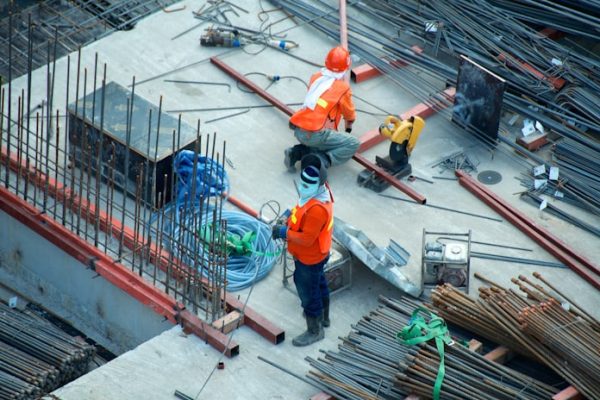
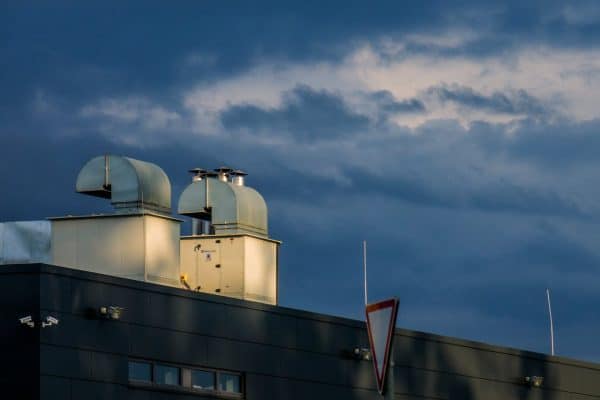
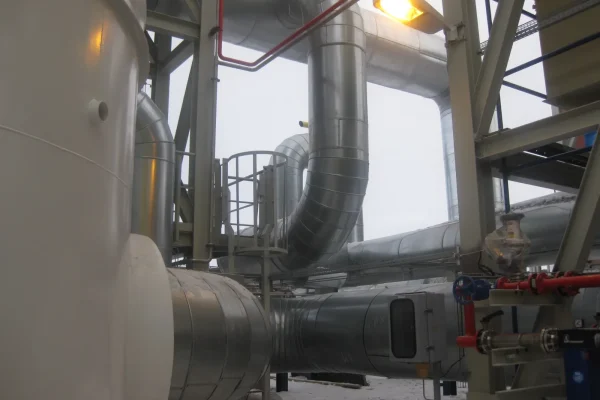
A series of industrial orders for insulation and related work at the Linde production site…
Read More →They trust us





ABL Engineering Group implements comprehensive solutions to protect industrial facilities from smoke and toxic gases. We design, install, configure and servicesmoke removal systems of any complexity – from small production facilities to large factory complexes.
Our approach coversfull cycle of work:
Thanks to our own production of equipment (modern machine park, 2 workshops with an area of more than 1000 m²), we provide complete quality control at every stage. The staff includes its own installation teams, certified fire safety engineers and specialists in the integration of fire safety systems.
Our experience: work since 2009 on the market, 40+ specialized facilities, including ArcelorMittal, large factories, shopping centers, warehouse complexes and office buildings throughout Kazakhstan.
We guarantee that your smoke removal system will comply with all regulatory requirements and work reliably in a critical situation.
Anti-smoke systems and air pressurization devices are a mandatory element of the engineering protection of industrial facilities, multi-storey buildings, shopping centers (shopping centers), warehouse complexes and office centers.ABL Engineering Group specializes exclusively in the B2B segment: design and installation of smoke removal systems at industrial facilities with an area of 500 m² or more. We do not work with residential buildings, apartments and individuals – only with industrial and commercial facilities throughout Kazakhstan (Almaty, Astana, Temirtau, Shymkent, Aktobe).
Since 2009, we have equipped more than40+ specialized projects, including factories (ArcelorMittal, metallurgical and engineering enterprises), workshops, warehouse complexes, shopping centers and office centers. Each facility requires an individual calculation of system parameters, taking into account the area, purpose of the room and operating conditions in accordance with regulatory requirements (SN RK 2.02-01-2021, Technical Regulations of the RK on Fire Safety, SNiP).
The smoke exhaust system consists of two main types of smoke exhaust valves:
Staircases, corridors, elevator shafts and airlocks require special attention when designing air pressurization systems. These building elements must be protected from smoke penetration during a fire – this is critical both in multi-storey buildings and in industrial premises.
| Room type / Building class | Fire resistance of valve | Regulatory document |
|---|---|---|
| Stairwells of multi-storey buildings | EI 60 — EI 90 | SN RK 2.02-01-2021 |
| Elevator shafts (class I–II) | EI 90 — EI 120 | SN RK 2.02-01-2021, Technical regulations of the RK on fire safety |
| Production workshops and warehouses | EI 60 | SNiP 21-01-97, Technical regulations of the Republic of Kazakhstan on fire safety |
| Shopping centers and office centers | EI 60 — EI 90 | SN RK 2.02-01-2021 |
Note: the choice of fire resistance class (EI 60, EI 90, EI 120) depends on the structural fire hazard class of the building and the requirements of the design documentation.
Team of technical and technical engineers of ABL Engineering Group (head –Korzhuk Lyubov Ivanovna, design engineer with many years of experience; specialist –Semenok Alexander Alexandrovich, Technical Department engineer) calculates the required number of smoke dampers, selects the type of drive (electromechanical, reversible, spring return) and fire resistance class in accordance with the requirements of the project.
What is included in the service:
Need a cost estimate? We will prepare a commercial offer within 24 hours
Get CPSelecting the correct smoke control valve is a critical decision that determines the effectiveness of the entire smoke control system. ABL Engineering Group works with two main types of valves:normally open (NO) andnormally closed (NC). Each type is designed to solve specific problems at your site.
Valves normally open (NO) remain in the open position when there is no power. When a fire alarm is triggered, they close, blocking the spread of smoke and toxic gases to adjacent rooms. Such valves are used in staircases, corridors and airlocks of multi-storey buildings.
Valves normally closed (NC) They work on the opposite principle: in the normal state they are closed, and when the fire automatic system is activated, they open, providing air supply to the protected areas. NC Pressure Valves are critical in elevator shafts and sealed spaces where positive air pressure must be created to prevent smoke penetration.
We use both types of valves from manufacturers that meet international quality standards. Each valve is tested for leaks and reliability before installation on site.
The fire resistance of a smoke exhaust valve is determined by its ability to maintain functionality when exposed to high temperatures. In Russia and Kazakhstan there are three main fire resistance classes:
The choice of class depends on the requirementsSN RK 2.02-01, Technical regulations of the Republic of Kazakhstan on fire safety andSNiP, which regulate fire protection for a specific type of building. Our Technical Department engineers (includingKorzhuk Lyubov Ivanovna andSemenok Alexander Alexandrovich) carry out fire resistance calculations based on an analysis of your facility and regulatory requirements.
An actuator is a mechanism that controls the opening and closing of a valve. The choice of drive affects reliability, response speed and integration with the fire automatic system (AUPT, APS).
| Drive type | Operating principle | Application |
|---|---|---|
| Electromechanical drive | Triggers when it receives an electrical signal from the AUPT. Provides precise control and monitoring of valve position through feedback sensors. | Smoke removal systems in multi-storey buildings, integrated with fire alarms. |
| Reversible drive | Allows the valve to change direction of movement depending on the signal. Used in systems with two-way control. | Complex air pressurization systems in staircases and vestibules. |
| Spring return | The valve returns to its original position thanks to a built-in spring when the power is turned off. Provides reliability in case of power failure. | Critical objects where guaranteed operation is required under any circumstances. |
All drives installed by ABL Engineering Group provideautomatic control through integration with the fire automatic system. When smoke or heat sensors are triggered, the valve instantly switches to the required state, preventing the spread of smoke and ensuring the safe evacuation of people.
The smoke removal system does not function in isolation – it is built into a single ecosystem of fire automatics. Integration with automatic fire extinguishing control (AUPT) and automatic fire alarm (AFS) provides a synchronized response to a fire in seconds.
When a smoke or fire sensor is triggered, the system of automatic fire extinguishing control devices receives a signal and transmits a command to open the smoke exhaust valves. The electromechanical valve drive operates instantly, allowing smoke masses to freely leave the room through the exhaust ducts. At the same time, air pressure is activated in the staircases and airlocks – this prevents the spread of smoke into evacuation zones.
Key elements of interaction:
An automatic fire alarm is the “nervous system” of a facility. Its sensors react to the first signs of fire, and the smoke control system receives a priority signal to operate. In industrial premises, where the speed of evacuation is critical, the integration of APS with air pressure valves saves lives.
Interaction scheme:
ABL Engineering Group designs and installs smoke removal systems with full integration into existing AUPT and APS networks. Our fire safety engineers develop control schemes that are consistent with the requirements of SN RK 2.02-01 and the Technical Regulations of the RK on fire safety. We use valves from trusted manufacturers with electromechanical actuators that ensure reliable operation in all conditions.
Commissioning work includes synchronization testing: it is verified that when a test signal is supplied from the APS, the valves open in the correct sequence, the booster fans turn on without delay, and the system logs all events. This ensures that in a critical situation the system will work flawlessly.
Advice from our Head of the Technical Department Korzhuk Lyubov Ivanovna:“Integration is not just about connecting wires. This includes coordinating control logic, calculating response times, and checking equipment compatibility. We carry out a full adjustment cycle and provide test reports confirming compliance with standards.”
Designing a smoke removal system is a complex process that begins with a detailed calculation of the parameters of your facility and ends with the development of complete design documentation. Each stage requires taking into account the specifics of the premises, the purpose of the building and current regulatory requirements.
At the first stage, our PTO engineers conduct a comprehensive analysis of the facility:
The calculation of parameters depends on various factors: air volume, type of production, the presence of additional air conditioning systems and air pressure. Each site requires an individual approach – there is no universal solution that will suit any industrial site or multi-storey building.
After completing the calculations, our team develops a full range of design documentation, including:
All documents are developed by certified Technical Department engineers and project managers of ABL Engineering Group. We guarantee that the design documentation fully complies with current regulatory requirements and standards, which eliminates the risk of failure during inspection by supervisory authorities.
Important: Design is not just a set of drawings. This is a set of calculations and analysis that determines the reliability of the entire smoke removal and air supply system in critical situations. A properly designed system ensures safe evacuation of people and protection of property in case of fire.
Installing a smoke removal and air supply system is not just about installing equipment. This is a complex of coordinated works that require experience, accuracy and understanding of the specifics of your facility. ABL Engineering Group carries out a full installation cycle with the participation of 25 certified teams, each of which has experience working at large industrial facilities, including ArcelorMittal, factories, shopping centers and logistics complexes.
The installation process begins with detailed site preparation. Our engineers mark routes, coordinate them with existing communications and determine the optimal location of smoke removal and air pressure valves.
Commissioning is the stage at which the system moves from a static state to an active mode. Our Technical Department engineers (Korzhuk Lyubov Ivanovna, Semenok Alexander Alexandrovich) carry out detailed adjustment of each component.
We understand that stopping production means direct losses. That’s why our teams work consistent schedules, often on night shifts and weekends, to minimize the impact on your business.
Result: After installation and commissioning are completed, you receive a fully functional smoke removal system that meets all regulations, is integrated with your fire automatics and is ready for operation. We provide a warranty on equipment and work performed, and also include your facility in a maintenance program.
A smoke extraction system is not a “set it and forget it” system. It requires constant monitoring and regular maintenance to ensure operation in critical situations. ABL Engineering Group conducts comprehensive testing of valve functionality, sensors, and integration with the control valve, ensuring your system is fully prepared for any scenario.
What is included in the maintenance:
Our certified fire safety engineers perform maintenance in accordance with the requirements of SN RK 2.02-01 and the Technical Regulations of the RK on fire safety, ensuring that each element of the system is ready for action.
Regular maintenance is the key to reliability. We recommend checking in the following mode:
| Type of check | Frequency | Execution Description |
|---|---|---|
| Visual inspection | 1 time per month | Inspection of accessible elements, monitoring the integrity of air ducts and fastenings |
| Functional testing | 1 time per quarter | Checking the response of valves, sensors and alarms |
| Full diagnostics | 1 time per year | Comprehensive testing of the entire system with documentation and drawing up a report |
| Maintenance with disassembly | Once every 2–3 years | Cleaning, lubrication, replacement of worn parts, calibration of sensors |
The exact frequency depends on the type of object, intensity of use and operating conditions. Our VET department is led byKorzhuk Lyubov Ivanovna will develop a customized maintenance schedule based on an analysis of your system.
Each inspection includes verification of compliance with applicable standards. We control:
Based on the results of the inspection, we issue a report indicating the identified deviations and recommendations for elimination. This is a document that protects you from claims from regulatory authorities and confirms the system’s readiness for operation.
Full cycle: design → installation → commissioning → maintenance– this is our guarantee that the smoke removal system will work flawlessly throughout its entire service life. Leave your maintenance to the professionals at ABL Engineering Group.
Last updated: 2024 | Versions: SN RK 2.02-01, Technical regulations of the RK “General requirements for fire safety”
All our smoke protection and air pressurization systems are designed and installed in fullin accordance with SN RK 2.02-01(fire safety requirements for smoke protection systems),Technical regulations of the Republic of Kazakhstan on fire safety(technical regulations on fire safety requirements) andSNiP(building codes and regulations). Each project is based on the provisionsSN RK 2.02-01 and requirementsTechnical regulations of the Republic of Kazakhstan “General requirements for fire safety”, which protects you from fines, production stoppages and, most importantly, guarantees the safety of people during evacuation in a critical situation.
This regulatory document establishes mandatory provisions for the design and operation of smoke removal valves, air ducts and integration units with fire automatics. The standard defines:
| Fire resistance class | Function saving time | Object type |
|---|---|---|
| EI 60 | 60 minutes at 900°C | Office centers, shopping centers up to 5 floors |
| EI 90 | 90 minutes at 900°C | Multi-storey buildings, warehouses |
| EI 120 | 120 minutes at 900°C | Industrial facilities, factories |
Our PTO engineers under the leadershipKorzhuk Lyubov Ivanovna(Head of the Technical Department) carry out calculations taking into account all regulationsSN RK 2.02-01 so that the smoke control system is guaranteed to operate at the time of fire. Each project is tailored to the requirementsthis standard.
Federal Law No. 123-FZ “Technical Regulations on Fire Safety Requirements” establishes rules and standards that apply to all industrial facilities, shopping centers, warehouse complexes and multi-story buildings. In the context of smoke control systems, this regulation requires:
We use only certified equipment from trusted manufacturers that fully meets the requirementsthis law. All our deliveries are accompanied by certificates of conformityTechnical regulations of the Republic of Kazakhstan on fire safety andSN RK 2.02-01.
Inspection and testing are an obligatory stage of our work cycle. We carry out:
Our experience –since 2009, 40+ specialized facilities, own installation teams— guarantees that each system will meet all requirements and work in a critical situation. Certified specialists are personally responsible for the quality of each project.
Question: Which fire resistance class should I choose in accordance with regulatory requirements?
Answer: The class depends on the type of building, number of floors and evacuation time. EI 60 – office centers and shopping centers up to 5 floors. EI 90 – multi-storey buildings and warehouses. EI 120 – industrial facilities and factories. Our engineers will carry out calculations based on your project and requirementsSN RK 2.02-01.
Question: How long does it take to install a smoke removal system?
Answer: The timing depends on the area of the facility and the complexity of the integration. On average: design – 2-3 weeks, installation – 4-8 weeks, commissioning and testing – 1-2 weeks. Total: 2-3 months.
Question: Is certification of specialists required in accordance with the Technical Regulations of the Republic of Kazakhstan on fire safety?
Answer: Yes, this is requiredTechnical regulations of the Republic of Kazakhstan on fire safety and regulatory requirements. All our technical assistance engineers and project managers have certificates from the Ministry of Emergency Situations of the Republic of Kazakhstan and permission to work at hazardous facilities.
Question: What equipment do you use in accordance with SN RK 2.02-01?
Answer: Only certified equipment from proven European and Asian manufacturers, as well as components of ABL’s own production. All equipment has certificates of conformityTechnical regulations of the Republic of Kazakhstan on fire safety andSN RK 2.02-01.
Question: Do you provide a guarantee?
Answer: Yes, the warranty for installation work is 3 years, for equipment – according to the manufacturer’s warranty (usually 5 years). Maintenance is included in the price.
Question: How often is maintenance required according to regulatory requirements?
Answer: According to requirementsSN RK 2.02-01– at least once a year. We recommend 2 times a year (spring and autumn). Maintenance costs are included in our service contract.
✓ Result: ComplianceSN RK 2.02-01, Technical regulations of the Republic of Kazakhstan on fire safety and SNiP is not a formality, it is your legal and physical safety. We take this responsibility seriously and ensure full compliance with regulatory requirements at all stages: from design to service. Our team of experts is ready to help you choose the best solution.
Or contact directly:
Internal links: Smoke exhaust valves | Air pressure valves | Integration with AUPT and APS | Portfolio of projects | About ABL Engineering Group
ABL Engineering Group providesguarantees for all equipment and work performed. This confirms our confidence in quality and protects you from unexpected costs when operating your smoke removal system.
Since 2009, we have completed 40+ specialized projects and guarantee the reliable operation of each installed smoke exhaust valve, air duct and integration unit with fire automatics (AUPT, APS). Our warranty policy applies to both third-party components and our own equipment manufactured in Temirtau workshops.
We use modern components from trusted manufacturers, each of which has its own manufacturer’s warranty. Additionally, ABL Engineering Group guarantees:
The warranty covers manufacturing defects and installation errors. Damage caused by improper operation, lack of maintenance or external factors is excluded.
The work performed guarantees compliance of the system with the requirements of SN RK 2.02-01, Technical Regulations of the RK on fire safety and SNiP. Our own installation teams work under the supervision of the Head of the Technical Production Department, Lyubov Ivanovna Korzhuk, and the Technical Production Engineer, Alexander Aleksandrovich Semenok, which ensures the quality of each stage:
The labor guarantee includes the elimination of defects identified during the warranty period and retesting of the system if necessary. We guarantee that the system will be ready for operation and comply with all regulatory requirements at the time of delivery of the facility.
Why ABL Engineering Group’s guarantees matter: Our own production of equipment (modern machine park, 2 workshops with an area of more than 1000 m²) allows us to control quality at every stage. We bear full responsibility for the reliability of the system and are ready to guarantee its functionality.
If you have questions about warranty coverage or terms of service, please contact the Sales and Project Management Department (Ildar Ildarovich Khasanov) – we will provide detailed information tailored to your facility.
Since 2009, ABL Engineering Group has equipped smoke removal and air supply systems40+ industrial facilities– from large factories and metallurgical plants to shopping centers, warehouse complexes and office centers. Our experience is confirmed by working with clients such asArcelorMittal, large engineering and food production facilities, logistics centers throughout Kazakhstan.
Each of the 40+ specialized objects is a unique project with its own technical requirements and regulatory restrictions. Our specialists work with industrial facilities of any scale, integrating smoke removal systems into the existing fire automatics infrastructure (AUPT, APS). Examples include:
The professional team of ABL Engineering Group consists ofown installation teams and engineering department specialists. The team includes:
Each engineer has been trained in the regulatory framework (SN RK 2.02-01, Technical Regulations of the RK on Fire Safety, SNiP) and has experience working with equipment from the world’s leading manufacturers.
This allows us to guarantee the quality of every component – from valve bodies to mountings and controls. The equipment manufacturers we use confirm that all products comply with fire resistance requirements (EI 60, EI 90, EI 120) and technical specifications. Production control eliminates delays, rework and inconsistencies at the installation stage.
By in-house, we complete projects faster, reduce costs, and ensure that every system installed will perform reliably in a critical situation.
ABL Engineering Group services industrial facilities throughout Kazakhstan with mobile teams; the head office and own production are located in Temirtau. Since 2009, we have implemented 40+ specialized projects, including smoke protection systems for ArcelorMittal, industrial plants, shopping centers and warehouse complexes with an area of 500 m² or more. We always ensure reliability and timely completion of each project.
Our field teams are staffed with qualified engineers and our own installation personnel, ready to design, install, commission and maintain smoke removal equipment. We integrate smoke protection systems with fire automatics (AUPT, APS) in accordance with the standards of SN RK 2.02-01, Technical Regulations of the RK on fire safety and SNiP.
Our company has its own production in Temirtau (modern machine park, 2 workshops with an area of more than 1000 m²), which allows us to always control the quality of each valve and system element at all stages of production. This eliminates delivery delays and guarantees equipment compliance with fire resistance classes EI 60, EI 90, EI 120.
Collaboration with local partner companies and construction organizations allows us to quickly respond to urgent calls, compliance inspections and scheduled maintenance of smoke control solutions without conflicts with other contractors.
Our own production and trusted suppliers allow us to guarantee the delivery of equipment on time consistent with the construction schedule. Each project is accompanied by documentation of compliance with the regulatory framework and quality certificates.
What standards regulate smoke control systems in Kazakhstan?
Design and installation are carried out in accordance with SN RK 2.02-01 (smoke protection), Technical Regulations of the RK on Fire Safety (technical regulations on fire safety requirements) and SNiP. All systems are subject to integration with an automatic fire alarm (AFS) and an automatic fire extinguishing installation (AUPT).
What is the difference between NO and NC valves?
Normally open (NO) valves are used in smoke removal systems and open when the fire alarm system is activated. Normally closed (NC) valves are used in air pressurization systems and close when smoke is detected, preventing its spread into the protected premises.
Which fire resistance class should I choose for my property?
The choice of class (EI 60, EI 90, EI 120) depends on the category of the object and the requirements of regulatory documentation. Our engineers will carry out calculations and recommend the optimal solution at the design stage.
How long does it take to install a smoke exhaust system?
The timing depends on the area of the facility, the complexity of engineering solutions and the availability of ready-made design documentation. A typical project with an area of 500–1000 m² is implemented within 2–4 weeks, including commissioning.
Do you provide post-installation maintenance?
Yes, we always provide scheduled maintenance, compliance testing and emergency repairs to smoke control systems. Service is available throughout Kazakhstan – specialists travel to the site.
Do you work with foreign equipment brands?
Yes, we integrate equipment from leading manufacturers with Kazakhstani fire automatic systems, ensuring full compatibility and reliability.
Article prepared by: Khasanov Ildar Taufikovich, Director of ABL Engineering Group
Reviewed by: Korzhuk Maxim Alexandrovich, management; Semenok Alexander Alexandrovich, VET Engineer
Updated: January 2024
{
"@context": "https://schema.org",
"@type": "Organization",
"name": "ABL Engineering Group",
"description": "Industrial engineering company. Smoke protection systems, smoke removal valves, air pressure. Experience since 2009, 40+ specialized projects, own production.",
"foundingDate": "2009",
"areaServed": ["Almaty", "Astana", "Temirtau", "Shymkent", "Aktobe"],
"hasOfferCatalog": {
"@type": "OfferCatalog",
"name": "Smoke protection systems",
"itemListElement": [
{"@type": "Offer", "name": "Smoke exhaust valves (NO, NC)"},
{"@type": "Offer", "name": "Air pressurization systems"},
{"@type": "Offer", "name": "Integration with AUPT and APS"},
{"@type": "Offer", "name": "Maintenance"}
]
},
"contactPoint": {
"@type": "ContactPoint",
"contactType": "Sales",
"areaServed": "KZ"
} }
The cost of a smoke removal and air pressurization system depends on the parameters of your facility: area of premises, number of valves, type of drive (electromechanical, reversible, spring return) and fire resistance class (EI 60, EI 90, EI 120). Each industrial facility is unique, so we provide an individual calculation and detailed estimate within 1-2 days after consultation with your team.
The design stage includes calculation of the necessary parameters, selection of equipment (valves, air ducts, fans), development of design documentation and coordination with the requirements of SN RK 2.02-01, Technical Regulations of the RK on fire safety and SNiP. Fire safety engineers of ABL Engineering Group perform a full calculation taking into account the integration into your fire automatics system (AUPT, APS). You can get a preliminary calculation after analyzing the site plan and technical specifications.
Installation includes laying air ducts, installing smoke exhaust and pressure valves, integration with automation and full testing of the system. The cost depends on the complexity of the object, the number of installation points and completion time. Our own installation teams are ready to order and carry out work with minimal downtime for your production. Commissioning includes checking compliance with regulations and documenting the results.
Maintenance and inspection of the smoke removal system is a mandatory procedure that is carried out in accordance with the requirements of regulatory documentation. We offer annual maintenance contracts that include periodic inspection of valves, sensors, ductwork and any necessary adjustments. The cost depends on the area of the facility and the number of valves in the system.
The process of obtaining a quote is simple and transparent:
Individual approach to each object– this is our principle. We do not offer standard solutions: each calculation takes into account the specifics of your production, regulatory requirements and features of integration with existing automation. Since 2009, we have equipped 40+ specialized projects, and each time we have found the optimal price-quality ratio.
Transparent pricing means there are no hidden fees in the estimate. You see the cost of each component, work and service. Equipment and labor warranties protect your investment.
“We calculate the cost not according to a template, but according to the real parameters of your object. This guarantees that you will not overpay for unnecessary components and will receive a system that fully complies with the requirements of SN RK 2.02-01 and the Technical Regulations of the RK on fire safety.” — Khasanov Ildar Ildarovich, management of the sales and projects department.
Incorrect calculation of parameters, non-compliance with standards or installation errors can lead to system failure in a critical situation. In the event of a fire, when every second determines the safety of people, the system must work flawlessly. Toxic gases and combustion products spread at a speed that leaves no time for correction.
ABL Engineering Group minimizes these risks through certified specialists and full testing at every stage.
The smoke removal system must work in the most difficult situations – when failure means danger. Incorrectly calculated parameters lead to the fact that the valves do not open on time, the fans are not powerful enough, or the air ducts do not provide the required volume of smoke removal.
Our PTO engineers carry out detailed calculations taking into account:
Each calculation is checked twice – this is mandatory when working with critical systems.
The smoke removal system must strictly comply with the requirements of SN RK 2.02-01, Technical Regulations of the RK on fire safety and SNiP. Non-compliance with regulatory documents leads not only to fines, but also to a stoppage of production and the inability to obtain permission to operate the facility.
We guarantee compliance with all standards at every stage:
ABL Engineering Group implements the full cycle: design → installation → commissioning → maintenance. This eliminates gaps in responsibility and inconsistency between stages.
Design: certified engineers carry out calculations taking into account all parameters of the object. Checking compliance with the requirements of regulatory documents is mandatory.
Installation: ABL Engineering Group’s own installation teams work according to uniform quality standards. Each team consists of specialists with experience working at industrial facilities. Laying air ducts, installing valves, connecting electromechanical drives – everything is carried out strictly according to the design documentation.
Commissioning and testing: Carrying out a full cycle of tests includes checking the opening/closing of valves, measuring the performance of fans, checking integration with the automated fire control system and automatic fire alarm system. All results are recorded in protocols.
Maintenance: Regular checks and adjustments of the system ensure that it remains in working order. We carry out maintenance in accordance with the requirements of regulatory documentation.
Since 2009, ABL Engineering Group has equipped 40+ specialized projects with smoke removal systems. Our clients are ArcelorMittal, large factories, shopping centers, warehouses, office centers. Not a single facility was stopped due to system non-compliance with requirements.
Contact us— get advice from a certified Technical Department engineer and a calculation of a system that will work flawlessly in any situation.
Smoke exhaust valves are divided into two main types:
The fire resistance class determines how long the valve maintains its tightness and load-bearing capacity at high temperatures (according toEN 13501-1):
All smoke protection systems in Kazakhstan must comply with:
Integration with fire automatics– critical moment. The smoke removal system must receive signals from:
The type of drive affects the reliability and speed of operation:
The timing depends on the scale of the object and the complexity of the work. On average:
ABL Engineering Group provides guarantees for all equipment and work performed. This confirms our confidence in quality and protects you from unexpected costs. Warranty service includes:
Yes, ABL Engineering Group works throughout Kazakhstan with mobile teams; the head office and own production are located in Temirtau. We are ready to carry out design, installation and maintenance at sites in any city in the republic. Our logistics and coordination allow us to provide prompt service and minimize equipment delivery times.
Since 2009, ABL Engineering Group has equipped smoke removal and air supply systems40+ industrial facilities. Among our clients are ArcelorMittal, large factories, shopping centers, warehouses, and office centers. Our experience confirms our ability to work on complex facilities of any scale. Examples of completed projects:
Yes, technical documentation is required. We develop a full set of design documentation, including:
The smoke exhaust system requires regular maintenance. We recommend inspection and maintenance at least once a year and after each trip. Maintenance includes:
Yes, modernization is possible. If your system is outdated or does not meet new regulatory requirements, we will evaluate and offer upgrade options. It could be:
ABL Engineering Group uses equipment from proven European and Asian manufacturers. Key component selection criteria:
The calculation is based on the parameters of your object:
Commissioning works include:
Incorrect calculation of parameters, non-compliance with standards or installation errors can lead to:
Contact us now:
A series of industrial orders for insulation and related work at the Linde production site…
Read More →Complete filter ventilation system: equipment, production of air ducts and installation on site in Karaganda.
Read More →22 contracts and DS for 10 years: ventilation, engineering networks, thermal insulation and equipment for…
Read More →A complete guide to designing HVAC systems for commercial and industrial facilities. Norms, stages, standard solutions.
Order design and installation of warehouse ventilation ABL Engineering Group carries out a full cycle of work – from technical…
Order installation and maintenance of office ventilation ABL Engineering Group carries out a full range of works on installation, configuration…
The engineer will examine the materials and clarify the missing parameters. We will agree on the deadline for preparing a commercial proposal after checking the initial data.