Thermal insulation of pipelines is a mandatory element of any industrial heating network, steam pipeline or process line. Proper insulation reduces heat loss, protects personnel and extends the life of pipelines. Let’s look at why it is needed, what materials are used and how to choose insulation for a specific object.
Why do you need thermal insulation of pipelines?
An uninsulated hot pipeline wastes heat into the environment – this is a direct loss of energy and money. Thermal insulation solves several problems at once:
- Reduced heat loss— heat reaches the consumer and is not dissipated in the workshop or on the street;
- Personnel protection— the insulation surface remains safe to touch;
- Technology stability— the medium in the pipeline does not cool down ahead of time;
- Protection against corrosion and condensation— especially on cold lines;
- Energy savings– by reducing heat losses.
What pipelines are insulated?
Thermal insulation is used on a wide range of lines:
- heating networks, steam pipelines and condensate pipelines;
- hot and cold water supply;
- technological pipelines in production;
- flues and air ducts of ventilation, dust extraction and gas cleaning systems;
- cold lines – with anti-condensation insulation.
Thermal insulation materials
Mineral (basalt) wool
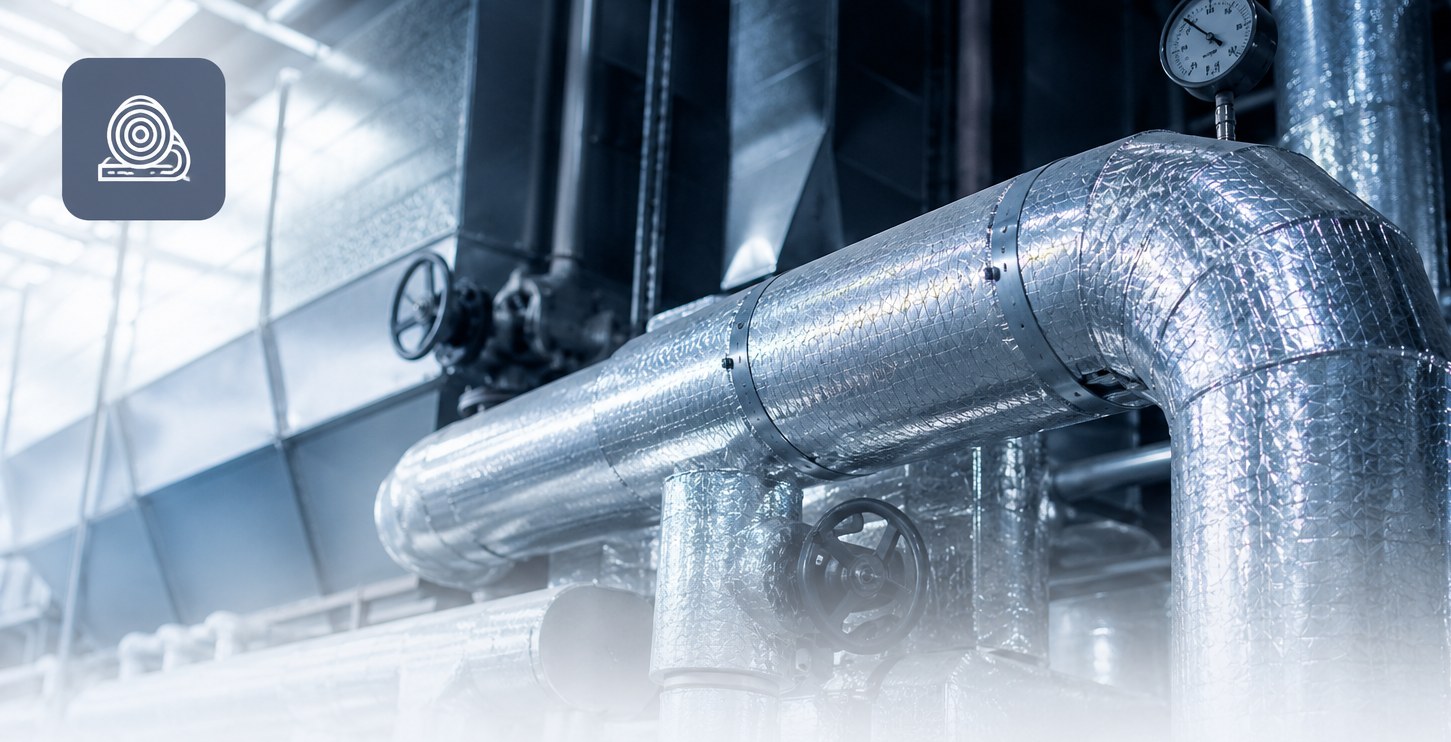
Basic material for hot pipelines. Available in the form of mats, cylinders and slabs, it can withstand high temperatures and is non-flammable. It is used on steam pipelines, heating networks and technological lines.
Foam rubber and polyethylene
Used for cold lines and anti-condensation insulation. They have low water absorption and simultaneously serve as a vapor barrier.
Cover layer
A protective casing is mounted on top of the insulation – galvanized or stainless steel, reinforced foil. It protects the insulation from mechanical damage and moisture and gives the pipelines a neat industrial look.
How is insulation thickness calculated?
The thickness of the thermal insulation is determined by thermal engineering calculations – based on the ambient temperature, pipeline diameter, permissible heat loss and surface temperature. The calculation is carried out according to the current standards of the Republic of Kazakhstan (SN RK). You cannot skimp on thickness: insufficient insulation has no effect, excessive insulation increases the cost of work without benefit.
Who does the insulation?
The quality of insulation depends on the accuracy of installation: dense laying of the material, correct installation of the covering layer and sealing of joints.Thermal insulation of pipelines and equipmentis one of the core areas of ABL Engineering Group. We calculate the thickness, select materials and install insulation with a cover layer using our own teams, including at existing production facilities throughout Kazakhstan.